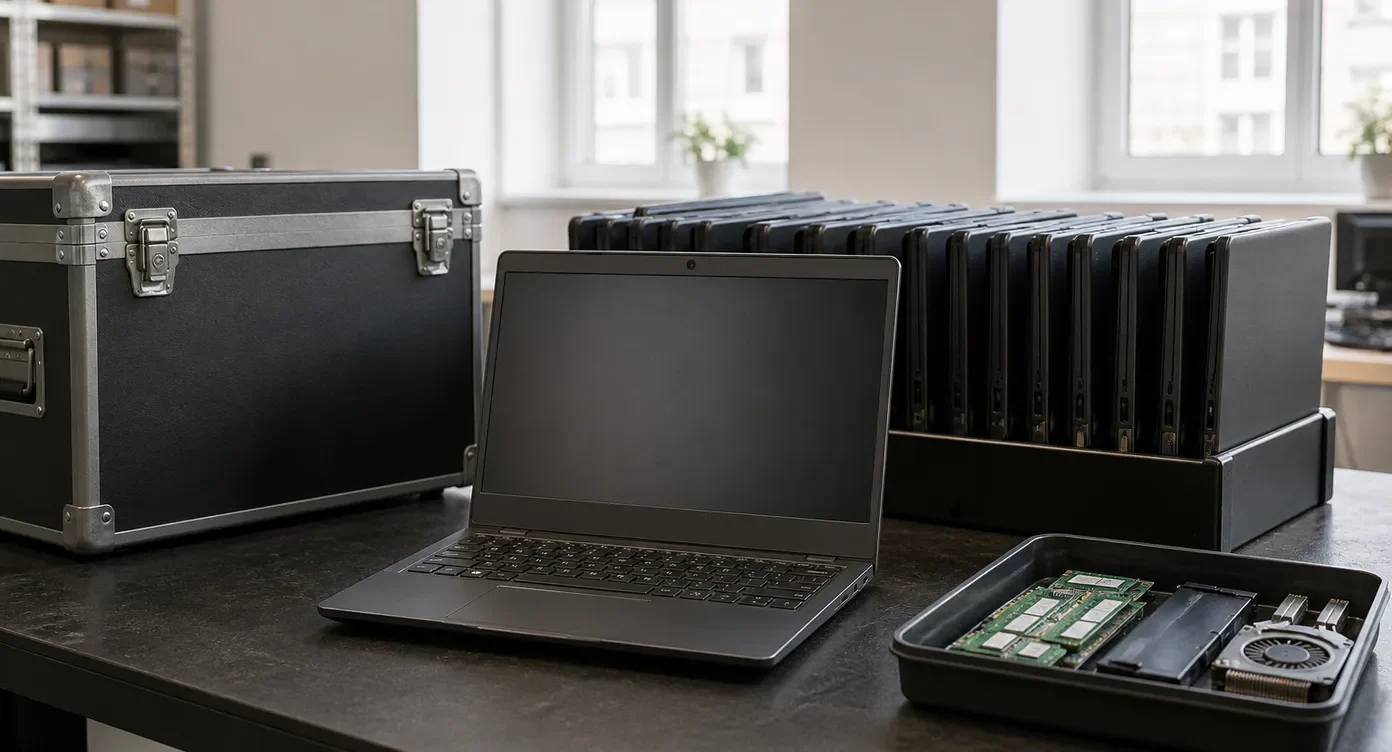
From disposal to asset recovery
Computer recycling has changed over the past 20 years because redundant IT assets are no longer viewed simply as waste. Businesses now need to consider stored data, chain of custody, remaining useful life, residual value and measurable environmental impact before deciding whether equipment should be reused, remarketed or recycled.
Why the old recycling mindset is no longer enough
The earlier disposal mindset focused largely on removing unwanted hardware and recovering materials. That narrow view can overlook working devices, reusable components and equipment that still has value inside or outside the organization.
Modern asset recovery treats each device as both an information carrier and a potential resource. The relevant question has shifted from how quickly equipment can leave the premises to which outcome preserves value while meeting security, operational and sustainability requirements. Recycling remains necessary for assets without a viable second life, but it should follow assessment rather than replace it.
Data security changed the rules
Data security made simple computer disposal inadequate for business equipment. A notebook, server or storage device may carry confidential information, account details or internal configurations, so its handling creates an information risk even after the user has stopped working with it.
From physical devices to information risk
Organizations now need control over equipment while it moves between offices, storage locations and processing facilities. Secure reverse logistics and a documented chain of custody reduce uncertainty about where assets are and who handles them. Physical protection during transport also matters because damage can destroy residual value or prevent reuse.
Why evidence matters
A statement that data was removed offers limited assurance without supporting records. Certified data sanitization or destruction, accompanied by a Certificate of Data Removal and Destruction, provides evidence that an asset received the agreed treatment. PlanBit supports this requirement through secure data erasure and certified destruction, while its ISO 27001:2022 certification provides a defined information security framework. Its earlier recertification for ISO 9001, ISO 14001 and ISO 27001 was completed with no deficiencies.
Reuse became more valuable than recycling alone
Reuse preserves the function already built into a computer, while material recycling recovers resources after that function has ended. This distinction has moved refurbishment, repair, parts harvesting, redeployment and remarketing into the centre of business computer recycling decisions.
Redeployment before replacement
PlanBit reported growing demand in Q2 2026 for redeployment and remarketing options instead of automatic replacement. Suitable assets can be securely prepared, refurbished where required and configured for another user. Configuration may use the client’s corporate image or an OS-only installation, such as Windows 11.
Internal redeployment can extend useful life without transferring the device outside the organization. External remarketing can offer another route when equipment no longer fits internal needs but remains suitable for another user. Recycling becomes the appropriate route when reuse is no longer responsible or practical.
Residual value as a business consideration
Age alone does not determine an asset’s best destination. Condition, configuration, demand, repair requirements and lifecycle potential can affect residual value. A professional assessment helps an organization compare the likely value of refurbishment or resale with the costs and limitations involved. PlanBit’s residual value services support that decision without assuming every redundant asset has resale potential.
Sustainability reporting now needs evidence
Sustainability claims carry more weight when the calculation method is transparent. Broad statements about greener disposal do not show whether reuse, refurbishment, transport, operation and eventual recycling have been considered consistently.
From good intentions to measurable impact
PlanBit calculates avoided CO2 emissions using a model from the Technical University of Berlin and a preparatory European study. The methodology covers impacts associated with production, distribution, operation, refurbishment, transport and recycling. An independent agency reviewed the calculation against applicable standards in 2023.
This evidence-based approach allows organizations to connect asset decisions with CSR reporting while understanding what the figure represents. The model compares the environmental impact and energy use of reusing a computer for three years with purchasing a new computer. Reporting therefore reflects a stated methodology rather than an unsupported environmental claim.
How PlanBit applies the new approach
PlanBit combines security, lifecycle assessment and sustainability reporting within its IT asset recovery services across the European Union. That combination reflects why IT recycling is different today: the outcome must protect information, maintain accountability and preserve useful value where possible.
Security, transparency and sustainability in one flow
For transport, the GPS-tracked, self-locking PlanBox provides 100% chain of custody and protects assets against transport damage. PlanBit then supports certified data erasure, refurbishment, residual value advice and remarketing according to the selected destination. The company is ISO 27001:2022 and ISO 45001 certified, and its team brings more than 100 years of combined experience in European asset recovery.
These controls matter because secure handling and value recovery cannot be separated. A device that loses its audit trail creates risk. A device damaged in transit may lose reuse potential. Reliable records also give IT, procurement and sustainability teams a shared basis for evaluating the result.
A practical redeployment example
For one client, PlanBit redeployed close to 12% of notebook volume that had reached the end of its OEM support period. The notebooks were revitalized, with batteries replaced where required, then deployed as hot-swap inventory within the organization.
The case shows why end of OEM support does not automatically equal end of useful life. Suitability still requires assessment, but redeployment allowed the client to use existing assets rather than procure additional new equipment for that purpose.
What organizations should do differently now
Organizations should assess value, security and lifecycle potential before defaulting to computer recycling. The decision should reflect data risk, secure logistics, internal demand, refurbishment needs, residual value and the evidence required for sustainability reporting.
A better question than ‘can we recycle this?’
Ask which responsible outcome fits the asset: redeployment, refurbishment, remarketing, parts recovery or recycling. That question recognizes redundant IT assets as business resources until evidence shows otherwise. For teams reviewing their current policy, the practical takeaway is clear: require auditable handling and compare viable second-life routes before approving material recycling.
Is redeployment an option for your IT assets? Contact us at info@planbit.nl. We will help you assess value, security and lifecycle potential before any equipment is sent for recycling.
Frequently asked questions
Why has computer recycling changed over the past 20 years?
Business computers now carry greater information risk and may retain useful life or residual value. Organizations therefore assess secure handling, data sanitization, reuse, refurbishment, redeployment, remarketing and measurable environmental impact before choosing recycling.
Why is data security important in computer recycling?
Retired devices may still contain confidential information and internal configurations. Certified data sanitization or destruction, supported by auditable records, helps demonstrate that the agreed treatment took place.
Is reusing a computer better than recycling it?
Reuse can preserve the function already built into a device, but it is only appropriate when the equipment remains suitable and can be prepared securely. Assets without a responsible second-life option should move to parts recovery or recycling.
What should a business assess before recycling redundant IT assets?
A business should consider data risk, chain of custody, technical condition, internal redeployment demand, refurbishment needs, residual value and sustainability reporting requirements before selecting the asset’s destination.