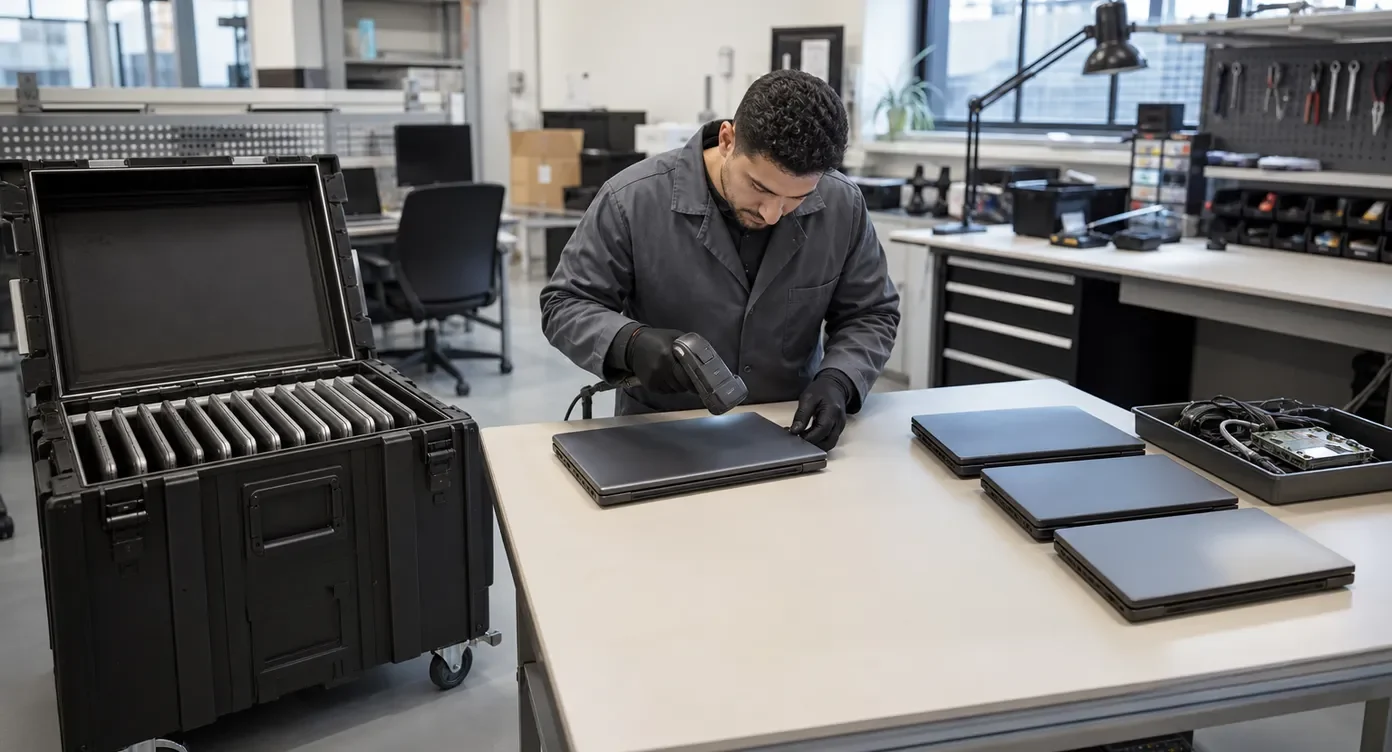
ITAD is short for IT Asset Disposition, and its meaning, scope and business benefits decide what happens to redundant hardware once active use ends. What follows sets out what the term covers, which activities fall inside it, and where the security and commercial value sits.
What Does ITAD Actually Mean?
ITAD stands for IT Asset Disposition: a structured business discipline for managing redundant IT assets securely, responsibly and economically. Its scope runs from collection and controlled transport through data sanitization, refurbishment, value recovery, remarketing and, where reuse is unsuitable, recycling.
That makes ITAD different from e-waste recycling. Recycling focuses on recovering materials from equipment that cannot return to use. ITAD first considers data risk, chain of custody, technical condition, refurbishment potential and residual value. Recycling remains one possible outcome within a broader asset recovery strategy.
What Falls Within the Scope of ITAD?
The scope of ITAD connects physical control, information security and commercial decision-making. A complete service should account for an asset from the point of collection until its data and final destination have documented outcomes.
Logistics and chain of custody
Reverse logistics covers onsite collection, secured transport and, for cross-border projects, relevant import and export handling. The key question is not simply whether equipment moves, but whether your organisation can verify who controlled it throughout that movement.
PlanBit performs asset recovery across all European Union countries. Its GPS-tracked, self-locking PlanBox provides 100% chain of custody, giving businesses a concrete control for tracking redundant IT assets rather than relying on an undocumented handover.
Data sanitization and certified destruction
Storage devices may contain personal information, intellectual property, credentials or operational records. Data sanitization therefore needs a defined, verifiable result. Depending on the asset and its condition, this can mean secure data erasure or physical destruction.
PlanBit provides certified secure data erasure and issues a Certificate of Data Removal and Destruction. Such documentation helps IT, security and compliance teams demonstrate the treatment of data-bearing assets. The company’s inventory and data cleaning services show how identification and sanitization fit within the wider ITAD scope.
Refurbishment, residual value and remarketing
Equipment that remains technically and commercially viable may support reuse after testing, repair or refurbishment. Residual value assessment then helps determine whether redeployment, remarketing, parts recovery or recycling offers the most appropriate outcome.
Commercial analysis should reflect the assets rather than a generic assumption about used hardware. PlanBit’s advisory scope includes fixed-price quotes, fair market value tables by part number and machine type, onsite appraisal visits, and repair cost estimates for leased equipment with missing or damaged parts. Its residual value services support an informed decision before assets enter a remarketing route.
Why Has ITAD Become a Business Priority Rather Than a Back-Office Task?
ITAD affects data security, ESG evidence and financial recovery, so responsibility extends beyond the team arranging equipment removal. IT leaders, security teams, procurement, finance and sustainability functions may all need reliable records from the same programme.
Poor control creates several forms of exposure. An organisation may lose visibility of data-bearing devices, lack proof of sanitization, miss reusable equipment or report environmental outcomes without a clear measurement basis. Treating the task as waste collection can therefore separate physical disposal from the business risks attached to each asset.
Demand for formal ITAD also reflects the need to preserve value. Hardware does not automatically become worthless when one user, lease or business unit no longer needs it. A structured assessment can identify equipment suitable for internal redeployment, refurbishment or remarketing before recycling becomes the final option.
PlanBit re-entered the IT asset disposition business in 2019 and reports consistent, sustainable growth since then. Its team brings more than 100 years of combined experience in European asset recovery, which matters when programmes involve different locations, asset categories and cross-border requirements.
What Are the Business Benefits of Well-Managed ITAD?
Well-managed ITAD converts an uncontrolled exit point into documented security, measurable sustainability information and potential financial return. The precise result varies with asset type, age, condition, market demand and data treatment requirements.
- Lower data exposure: controlled custody and certified sanitization reduce uncertainty about where devices are and what happened to stored information.
- Better financial recovery: appraisal, refurbishment and remarketing can preserve residual value that a disposal-only approach may overlook.
- More credible ESG reporting: documented reuse and recycling outcomes give sustainability teams evidence rather than estimates without a stated basis.
- Stronger governance: certificates, asset records and recognised management standards make internal reviews and customer due diligence easier to support.
Evidence quality deserves close attention. PlanBit bases its CO2 savings reporting on a scientific model from TU Berlin, independently reviewed in 2023. The company also holds ISO 27001:2022 certification for information security and ISO 45001 certification for health and safety. These points do not replace project-specific controls, but they provide verifiable context for how a provider manages security, people and reporting.
What Should You Look for in an ITAD Partner?
A credible ITAD partner should prove control at every point where assets, data, value or environmental claims could otherwise become unclear. Service descriptions matter less than evidence that your organisation can review and retain.
Start by checking whether the provider can show a verifiable chain of custody from collection to final outcome. Ask how transport is secured and tracked, which asset records you receive, and how the provider handles projects across the locations relevant to your business.
Examine data controls with the same care. Confirm which sanitization and destruction methods apply to your equipment, what certification accompanies the work, and how exceptions such as damaged or inaccessible media are documented. Recognised standards such as ISO 27001:2022 can support due diligence, while the actual certificate scope and operating controls still require review.
Sustainability claims should identify their calculation model and any independent review. Financial terms should explain valuation, repair deductions and remarketing outcomes clearly enough for procurement and finance teams to assess them. After defining these requirements, a step-by-step guide to handling retired IT equipment can help translate ITAD principles into internal responsibilities.
The practical takeaway is simple: evaluate ITAD as a connected control framework, not a collection service. Require evidence for custody, data treatment, standards, environmental reporting and residual value, then compare your current approach against that full scope.
Ready to see what your redundant hardware is actually worth? Request a valuation of your redundant IT assets and we will set out the appraisal options, data treatment and documentation that apply to your equipment.
Frequently asked questions
What does ITAD stand for?
ITAD stands for IT Asset Disposition. It is the structured management of redundant IT equipment from secure collection and data sanitization through refurbishment, remarketing, parts recovery or recycling.
How is ITAD different from e-waste recycling?
E-waste recycling focuses on material recovery from equipment that cannot return to use. ITAD has a broader scope that also covers chain of custody, data security, asset assessment, refurbishment, residual value and remarketing.
Why is ITAD important for businesses?
ITAD helps a business control data-bearing equipment, document sanitization, support sustainability reporting and recover potential residual value. It also creates records that security, procurement, finance and ESG teams can review.
What evidence should an ITAD provider supply?
Look for verifiable chain-of-custody records, certificates for data erasure or destruction, relevant recognised certifications, clear asset and value reporting, and a transparent basis for sustainability calculations.